By Angela M. Cranon, M.A.
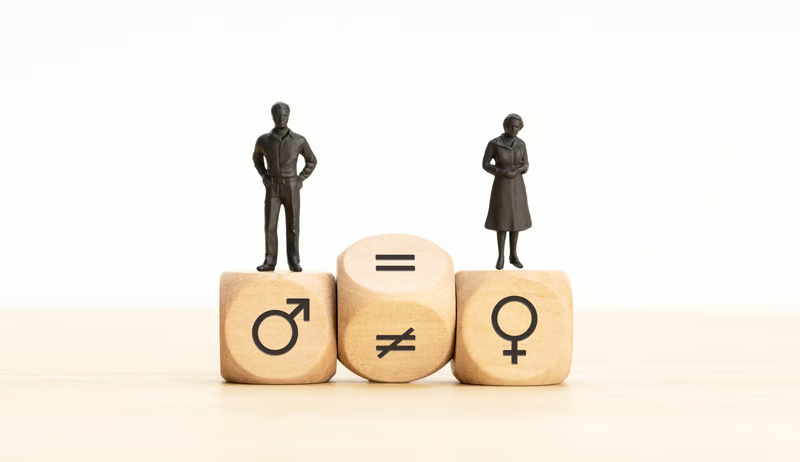
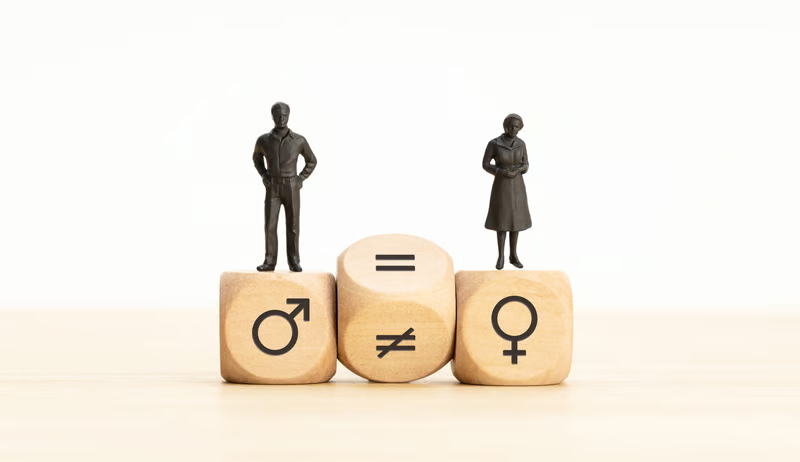
Why aren’t there more women politicians in America? When the word politics is normally brought up in a conversation, usually the talk is about Republicans and Democrats, or today, of course, President Donald Trump. The talk of the gender political gap is rarely discussed, which should be, considering the fact that there are more women than ever serving as Senators and in the House of Representatives, and America has a 51 percent population of women, yet men still dominate election wins.
According to the Centers for American Women and Politics in its Rutgers publication:
“In 2017, 105 (78D, 27R) women hold seats in the United States Congress, comprising 19.6% of the 535 members; 21 women (21%) serve in the United States Senate, and 84 women (19.3%) serve in the United States House of Representatives. Five women delegates (3D, 2R) also represent American Samoa, the District of Columbia, Guam, Puerto Rico, and the Virgin Islands in the United States House of Representatives.”
This boils down to approximately 38 women serving in Congress in 2017. Of that number, there are 18 African Americans, 10 Latinas, nine Asians (including American/Pacific Island), and one multiracial. Even though California leads the way in electing women into the House and the Senate—41 in total—followed by New York with 28, Mississippi and Vermont voters have never elected a female to Congress.
According to the Business Journal on politics, women are more likely to bring transparency to government, and new issues and perspectives to policy-making. Yet, either American voters do not vote for women, or women are just not interested in running for Congressional seats. To top it off, Hillary Clinton, one of America’s most popular females, could not capture the presidency in 2017—a position that many foreign countries have already allowed women to hold.
A World Economic Forum study from 2014 and 2016 reveals that there are currently 15 female world leaders, a number that has doubled since 2000. Yet, women still represent less than 10 percent of the 193 United Nations member states. In the United States and Mexico, there has never been a woman to serve as Chief Executive. Canada broke its record by putting a female prime minister into office, but she served just four months.
When the statistics are examined, it almost doesn’t make sense, considering that since 1980, women have outvoted men by at least four percent in presidential elections in America. In 2000, the gender-gap voter turnout averaged 16 percentage points, indicating a wider voting gap than in previous years between women and men, with women being the dominant voter. Yet, America has never elected a female president. Overall, in other elections, women outnumber men at the voting polls as well.
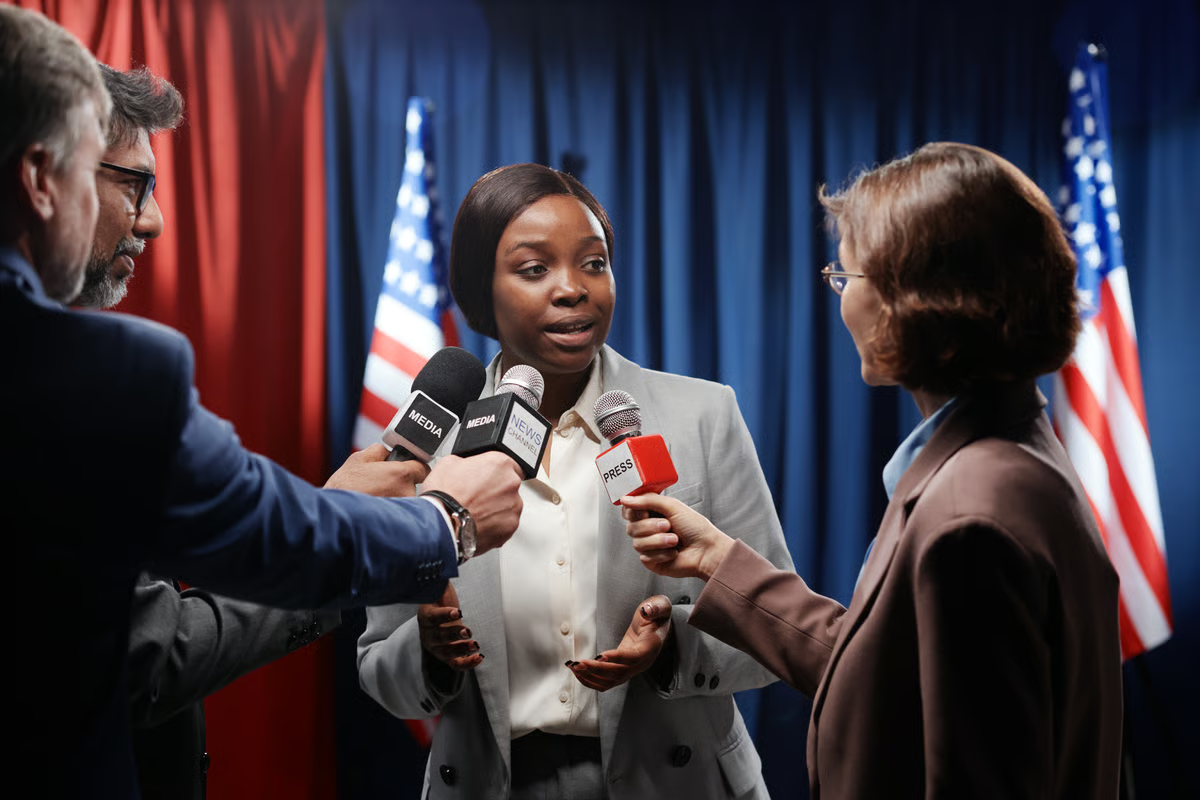
So why aren’t there more women politicians, especially since statistics show that there are more women voters than men? There are a few theoretical reasons, some of which may be controversial:
- Women may vote for men instead of their own gender because they do not trust women. Women are still leery of another woman running the country or holding powerful government positions.
- Men do not trust women to lead such a powerful country, so some men will never vote for a woman.
- Women do not like to be ruled by another woman. The ideological view that the head of the household is male extends to the White House. Some women still believe a male should be in charge, especially in powerful leadership positions.
- The stereotype or medical belief that women are more emotional than men influences whether a woman is seen as fit for politics, particularly as president of the United States, even though women in other countries have led successfully. While controversial, some argue that women’s sensitivity is exactly what’s lacking in politics today to address issues like world peace, domestic violence, child abuse, and poverty.
- The stress of the job could be too taxing for a woman, mainly because duties as a mother and wife often continue, leaving women with more responsibilities than just running the country.
These speculations also highlight another factor in the gender gap in politics. Although there are some successful women politicians, there are fewer women of color serving in these careers. Women of color face similar challenges as men of color: fewer supporters in powerful positions, and some voters question whether people from various ethnic groups have the educational background and experience for such roles.
One political theory that might help close the gender gap is to increase voter turnout, particularly among people of color. For example, President Obama received the highest number of minority votes in the history of a presidential election—68 percent—and became the first Black president of a country more than 200 years old. This controversial issue, and the theories explaining why a gender gap still exists in American politics, has driven anger, disappointment, and awareness. Nonetheless, this is the reality of America, and change is yet to be seen to close this gender gap. Before judging, consider the factual number of women in office; there has to be a concrete reason why, even in this century, the gender gap from the outside to the White House remains so wide.